My 2025: part two
What were the highlights of the working year 2025, and how will we remember the year that has passed? Inside Health spoke with a number of employees in very different roles about just that.

In the second and final article in the series ‘My 2025’, Inger Mechlenburg, Jens Christian Hedemann Sørensen and Maja Thomsen talk about the greatest experiences and challenges of the working year 2025 – and about what they are particularly looking forward to in 2026.
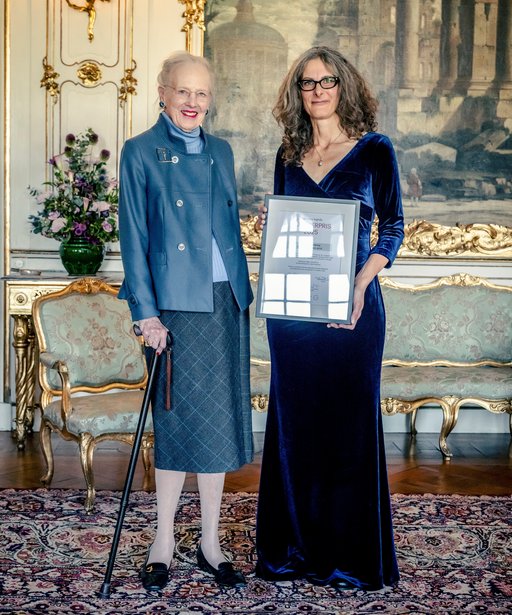
Inger Mechlenburg
Professor, Department of Clinical Medicine and Department of Orthopaedic Surgery, Aarhus University Hospital
This year you received the The Rheumatism Association’s research award. How did you experience the award ceremony and the recognition that followed?
It was a major and very joyful experience to receive the award at Fredensborg Palace and to meet Queen Margrethe. The ceremony was beautifully organised, and the atmosphere was both solemn and relaxed. I gave a speech about my research, followed by an opportunity for conversation.
It meant a great deal to me that both my husband and the Vice-dean for Research were present, so that we could share the experience. I was also very pleased that colleagues had nominated me for the award – that is a great acknowledgement. The attention surrounding the award has also led to many conversations about exercise and arthritis, both professionally and privately, and even residents in my local area have become aware of my work after hearing about the award in the local newspaper.
The Danish Rheumatism Association highlights your work on exercise as an alternative to surgery. What does that mean to you?
It is important to me that exercise is recognised as both prevention and treatment for osteoarthritis. Exercise can reduce pain and improve function, and it gives patients concrete options for action in a situation where chronic illness can otherwise create dependence on treatment and medication.
The guidelines specifically recommend exercise and patient education as the first-line treatment before considering surgery. When patients experience that they themselves can influence their body and symptoms, it strengthens both self-care and quality of life. It provides a sense of control in everyday life, where many otherwise feel limited by their condition.
What else has taken up most of your time in 2025?
My international collaboration with researchers from King’s College London and Oxford University has been a major focus. In 2025, we published five papers on, among other topics, shoulder osteoarthritis, shoulder fractures and COPD. It has been both professionally inspiring and educational to work with different treatment cultures across countries.
What are you most looking forward to in 2026?
I am looking forward to publishing the results of two large randomised clinical trials in which we compare the effects of exercise and surgery in patients with shoulder osteoarthritis and hip dysplasia, respectively. Both studies have the potential to influence clinical practice internationally.
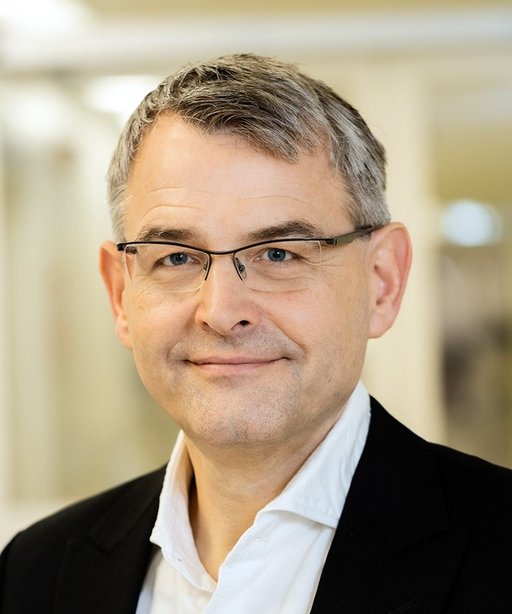
Jens Christian Hedemann Sørensen
Clinical Professor, Head of the Department of Neurosurgery, Aarhus University Hospital, and Chair of The Danish Neuroscience Center.
2025 marked the culmination of a long process for The Danish Neuroscience Center which received more than half a billion Danish kroner for a new building. How has it gone?
2025 has been a decisive year, in which funding for the new building finally fell into place. This marks the end of a many-year process and the beginning of the next phase.
It has been absolutely central to me that the centre becomes more than just a building – a powerhouse for patient-centred, translational neuroscience research with close integration between psychiatry and somatic medicine, and between clinic, laboratory and patients.
Physical proximity is crucial for ensuring that new knowledge can be translated more quickly for the benefit of patients.
This year you have passed the baton on in several contexts. What has that meant for you?
It has felt right to hand over leadership roles in both NeuroCampus Aarhus, Neuroscience Academy Denmark and the DANDRITE Executive Board. When initiatives have become sustainable, it is healthy to make room for new perspectives.
At the same time, this has freed up time, which I now use on the strategic priorities of The Danish Neuroscience Center and on clinical and translational research, where we can bring results to patients more quickly.
What else has been a highlight in 2025, and what are you looking forward to in 2026?
A major highlight was that Aarhus University Hospital was designated a Focused Ultrasound Center of Excellence – the first in Scandinavia. This opens up new opportunities for treatment and research in areas such as movement disorders, Parkinson’s disease and dementia.
In 2026, the focus will be on translating the visions into practice in the run-up to moving into The Danish Neuroscience Center’s new facilities in 2031: strengthening leadership, operations and collaboration, and seeing the centre function as a single, integrated, interdisciplinary unit for the benefit of patients and society.
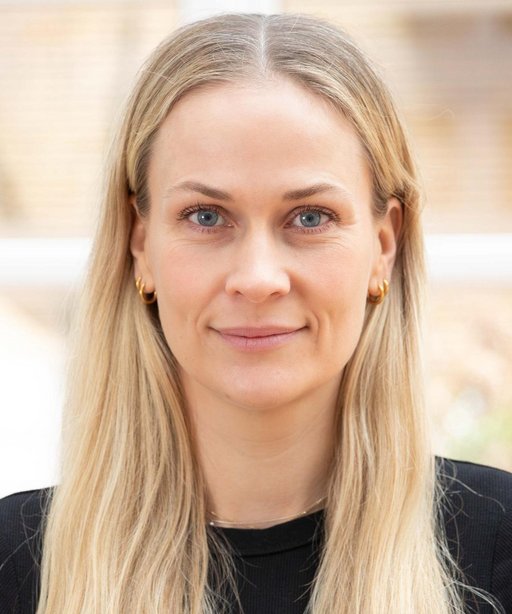
Maja Krüger Thomsen
Management Consultant, Secretariat of the Department of Dentistry and Oral Health
What has been the main focus of your work in 2025?
I’ve had an exciting year, focusing on strengthening the institute’s research environment and strategy in close collaboration with management and researchers. I’ve also become more involved in information security – a complex area that requires attention to both behaviour and culture.
Has there been a particular event from the year that made an impression on you?
Research Retreat 2025, a two-day research seminar focused on interdisciplinarity and collaboration for the institute’s academic staff, was definitely a highlight. The seminar featured impressive presentations from the institute’s early-career researchers and inspiring input on interdisciplinary collaboration from invited speakers. The discussions sparked new ideas and strengthened both the academic and social community.
For me, the seminar underscored the importance of creating space for both professional exchange and relationships across the institute. We’ll repeat the format in 2026.
What experiences will you carry forward from 2025?
The conclusion of the institute’s research evaluation has been highly instructive. We’ve received valuable external feedback and developed a five-year action plan focused on recruitment, research funding, as well as impact and visibility. It will be exciting to follow its implementation.
What are you looking forward to in 2026?
I’m particularly looking forward to continuing the strategic work aimed at ensuring a strong and sustainable research environment and creating the right conditions for high-quality research.
At the same time, it will be important to support both researchers and management through the changes ahead.