Charlotte thought it was spam. Then she ended up on stage in front of Nobel laureates
Charlotte Steen Duholm travelled to Germany on her own to spend a week with 70 Nobel laureates. She came home with a new perspective on what a research career can look like – and with a piece of good advice for the next person from AU to be nominated.

FACTS: Lindau Nobel Laureate Meeting
The Lindau Nobel Laureate Meeting is held annually in the German town of Lindau, bringing together Nobel laureates and young researchers for talks, panel debates and more informal events.
The theme alternates between physics, chemistry, physiology/medicine and economic sciences. Every fifth meeting is interdisciplinary. In 2026, the meeting celebrated its 75th anniversary with an interdisciplinary conference featuring more than 70 Nobel laureates and 600 young researchers.
Participants must be nominated, and young researchers can only attend once. Charlotte Steen Duholm was one of four participants from AU.
The email looked like spam. The sender field did say something about the university, but the subject line referred to an event Charlotte Steen Duholm had never heard of.
The email contained a question. Would she be interested in being nominated for the Lindau Nobel Laureate Meeting 2026?
"I'd never heard of it before. At first I thought it was just spam," says Charlotte Steen Duholm.
It wasn't. The message came from the Dean's Office, and once she had looked into what it was about, two things were clear.
This was not something to take lightly. And she would never make it all the way through the selection process to what turned out to be extremely distinguished company.
"I was proud just to have been singled out by the university. It's amazing if someone has noticed what you're doing. But I also thought it was completely unrealistic that I'd end up actually going."
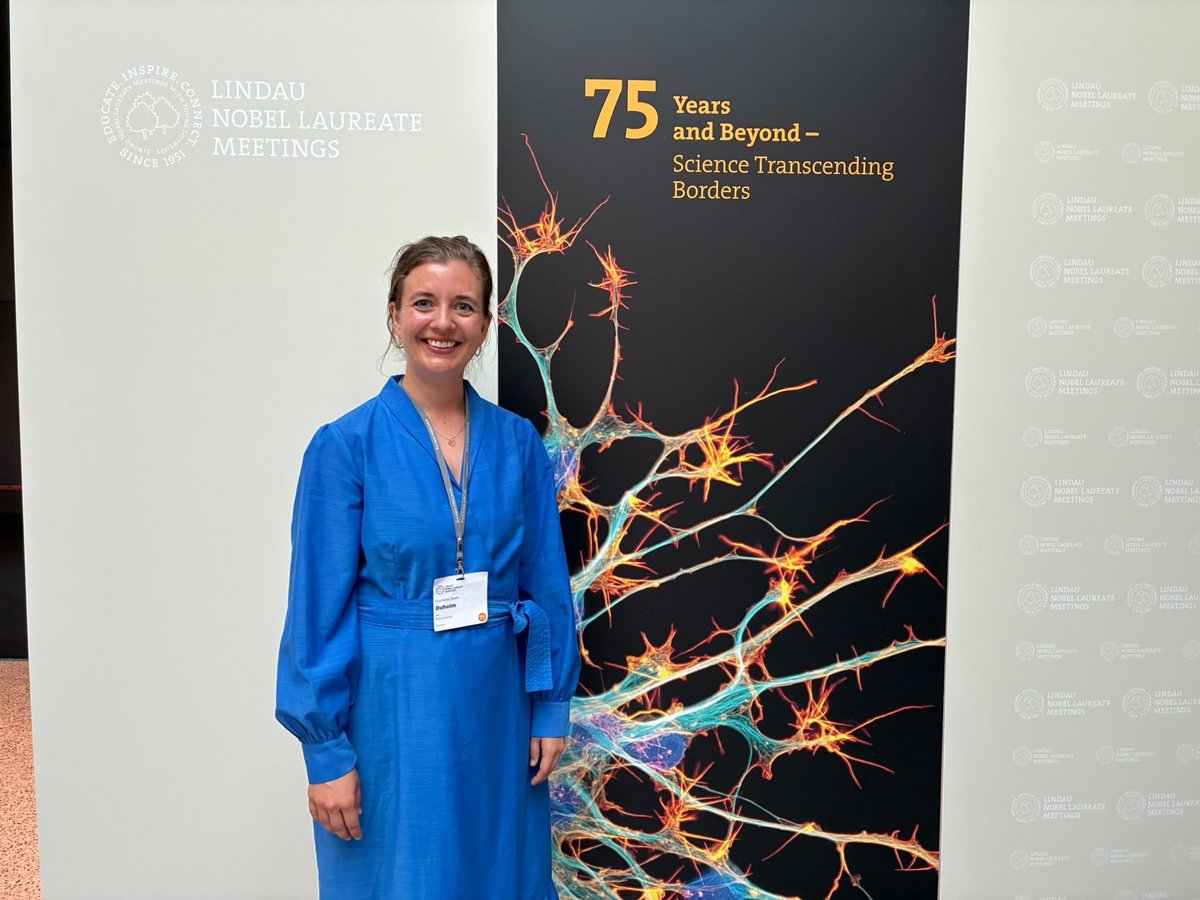
Charlotte Steen Duholm is 33, a qualified medical doctor and a PhD student at the Department of Clinical Medicine, affiliated with the Department of Child and Adolescent Psychiatry at Aarhus University Hospital.
Her research focuses on health anxiety in children and adolescents – the fear of being or becoming seriously ill – a condition that, according to Charlotte Steen Duholm, is overlooked in that age group.
A narrow gate
The email from the Dean's Office turned out to be only the first step in a long selection process consisting of four rounds. Two internal rounds at AU, then a national selection, and finally a committee under the Lindau meeting chose the researchers who were invited to the conference.
Charlotte Steen Duholm made it all the way. In late June she travelled to the 75th Lindau Nobel Laureate Meeting, where more than 70 Nobel laureates and 600 young researchers from around the world came together for a week.
Along the way, another opportunity presented itself. Participants could apply to give a talk about their own research. Around 400 applied. She was in doubt until the last moment.
"My immediate reaction was that I didn't dare sign up for something like that. But the day before the deadline I decided that now I'd been given this opportunity, so I had to make the most of it. At least then I could say I'd tried."
The applications first went to a vote among all participants, and a committee made the final decision among those who had received the most votes. Around 50 were selected. Charlotte Steen Duholm was one of them.
The queue at the entrance
Charlotte Steen Duholm travelled to Germany on her own and had no real sense of what to expect.
"I got really nervous about going. It's a different thing to travel completely on your own. And you're unsure what to say to them, or what to ask them about."
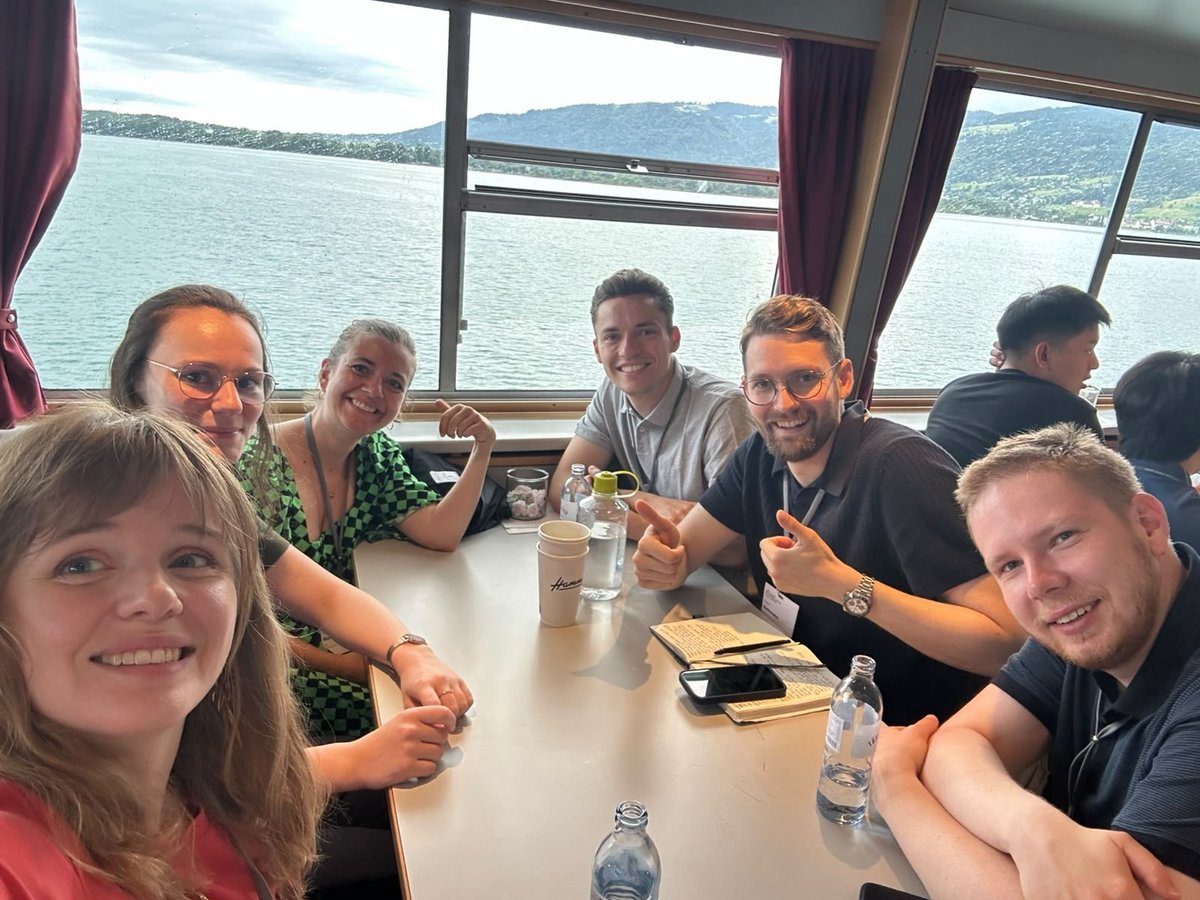
The queue outside the entrance was long, and security took time. But the experience began right there in the queue.
"Everyone was just so welcoming. Already there you were standing and talking to all sorts of different people from all over the world. Knowing that we had all been selected to be there made it something special."
The nerves soon faded. Another feeling lingered longer.
"I still don't understand today that I was selected for this. It really is a balance – leaning into the fact that someone actually did choose you, and thought you were good enough to take part in something like this."
Six minutes on the main stage
The conference ran from Sunday to Friday, and midway through the week it was her turn.
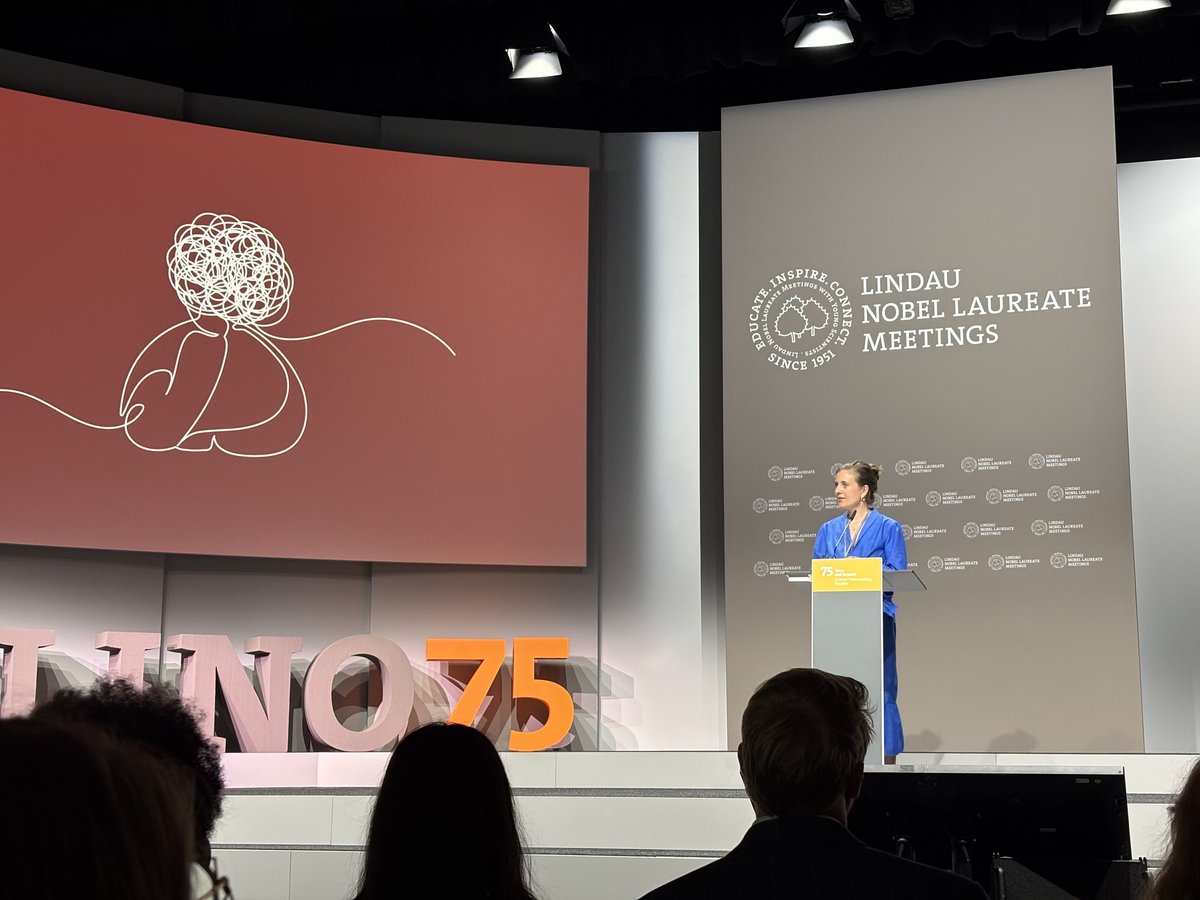
Only on arrival did she discover that her talk was to be given in the largest hall, with room for a thousand people. Sitting in the audience were a number of Nobel laureates.
Each speaker had been given six minutes, which did nothing to make it less stressful for the young researcher.
"If you ran over time, you were stopped. That was an extra layer of pressure – because you really do want it to go well when you're standing in front of a room full of incredibly clever, capable people."
The presentation went well, and afterwards several people came over to hear more. She expects to stay in touch with some of them.
A picnic with laureates
But it wasn't from the lectern that the most important encounters happened.
The programme alternated between talks, panel debates and more informal activities. And for Charlotte Steen Duholm, it was the latter that stayed with her.
"The best evening was a picnic in one of the parks in town, where local residents could join in as well. We ended up sitting at a table with several Nobel laureates, and it was very informal – completely relaxed."
"They were incredibly kind and curious. We talked about our research and theirs, but also about all sorts of other things, and it was good to meet the people behind the extraordinary work they've been recognised for."
At the table she spoke with a laureate who told her about his own discovery – and about how accidental it had been. Competing research groups had worked far more meticulously on the same problem. In his own lab, they had gone about it less thoroughly. It worked straight away.
"That was what kept coming up with several of them. They've worked their backsides off, but they've also been very lucky indeed. Almost all of them said so."
"You can sleep when you get home"
One of the questions that kept coming up in the open debates concerned work-life balance. And according to Charlotte Steen Duholm, the laureates' answers were strikingly similar.
"Many of them said there wasn't really any such thing as work-life balance. It's just been work."
For many young and ambitious researchers, that might sound discouraging. For Charlotte Steen Duholm, it was clarifying more than anything.
"For me, family weighs more heavily than my research. It's not that I've ever dreamed of winning a Nobel Prize, so in that sense it was actually fine. I'm genuinely passionate about my research, but it shouldn't come at the expense of my family. Fortunately, I can still have a good and meaningful research career without getting that far."
That the top doesn't have to be the goal was also the point made by one of the laureates Charlotte Steen Duholm had been looking forward to hearing before she left: Katalin Karikó, who received the Nobel Prize in Medicine in 2023.
"She made some really good points about how the purpose shouldn't be to reach the top. You should spend your energy on what you yourself can change. It's you and the attitude you bring that shape your career."
No elbows
Alongside the more than 70 laureates, 600 other young researchers took part, as well as a number of alumni who had attended in earlier years and had since established research careers of their own.
"The research world can be quite hardcore and competitive. But here it was really about how you could inspire and help each other."
Although Charlotte Steen Duholm was introduced to research that has changed the world, it is something else she singles out as the most important thing she took home from the conference.
"The academic side was great too, but it's definitely everything else that has stayed with me. I've come away with a different sense of what a research career can be," she says, adding:
"You don't have to be thinking ahead all the time. Sometimes you can just be where you are and trust that things will work out. It was inspiring to hear that they [the laureates, ed.] haven't always had a plan for everything either."
"You can sleep when you get home"
Charlotte Steen Duholm will submit her PhD thesis in October. After that the future is uncertain, as it is for many PhD students, but the dream is a joint position as both researcher and clinician.
And to the next person from AU to be nominated for the Lindau Nobel Laureate Meeting, she offers the advice she was given by the organisers themselves:
"They tell you when you arrive: you can sleep when you get home. And it's true. So much happens, and you have to join in with all of it. You get really, really tired – but you also take away an indescribable amount from it."
Contact
MD and PhD student Charlotte Steen Duholm
Aarhus University, Department of Clinical Medicine
Email: au510443@clin.au.dk
Phone: +45 28 70 93 12