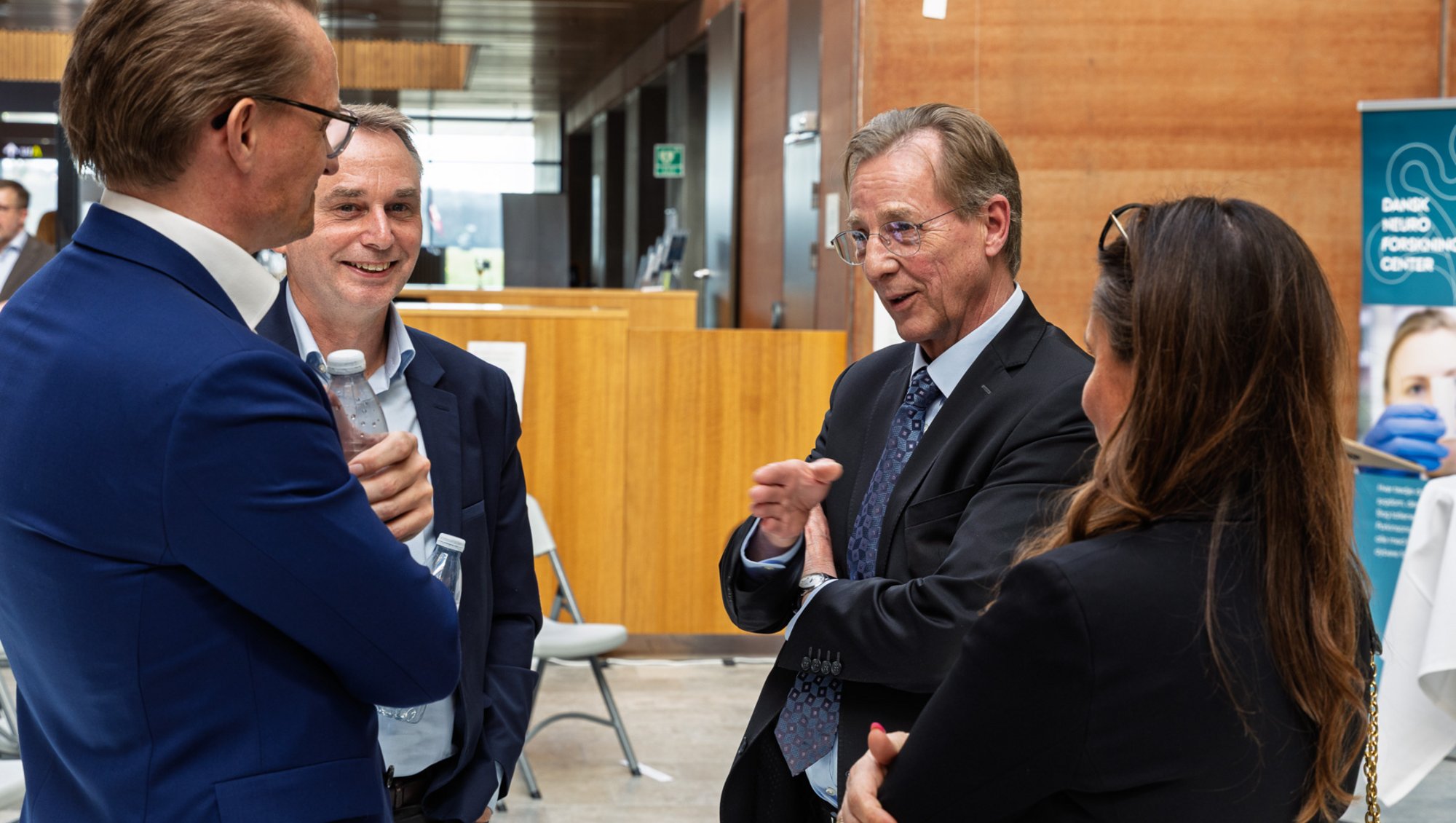
IN PICTURES: Researchers and leaders thank donors behind half-a-billion-kroner brain centre
With more than 500 million kroner in funding secured, the Danish Neuroscience Centre can now move from vision to reality. On Tuesday, the donors who made it possible were honoured at an event at Aarhus University Hospital.

FACTS: The Danish Neuroscience Centre
- Location: On the grounds of Aarhus University Hospital in Skejby, between the somatic and psychiatric departments.
- Size: Approx. 12,000 square metres.
- Researchers: Brings together up to 400 researchers from Aarhus University and Aarhus University Hospital under one roof.
- Expected completion: 2031. The Central Denmark Region is the building owner.
- Funding: More than half a billion kroner from the Salling Foundations, the Lundbeck Foundation, KIRKBI A/S, the Aarhus University Research Foundation and the Central Denmark Region.
- Unique feature: The world's first research centre to integrate psychiatric and somatic brain research at the same address as a psychiatric and somatic hospital.
- BRAIN UNIVERSE: On the ground floor, a public engagement centre will open its doors to citizens, patients and school classes for exhibitions, talks and events on brain health.
- Background: DNC was established in 2009 by the Central Denmark Region and Aarhus University and has since been behind internationally recognised treatments for conditions including stroke.
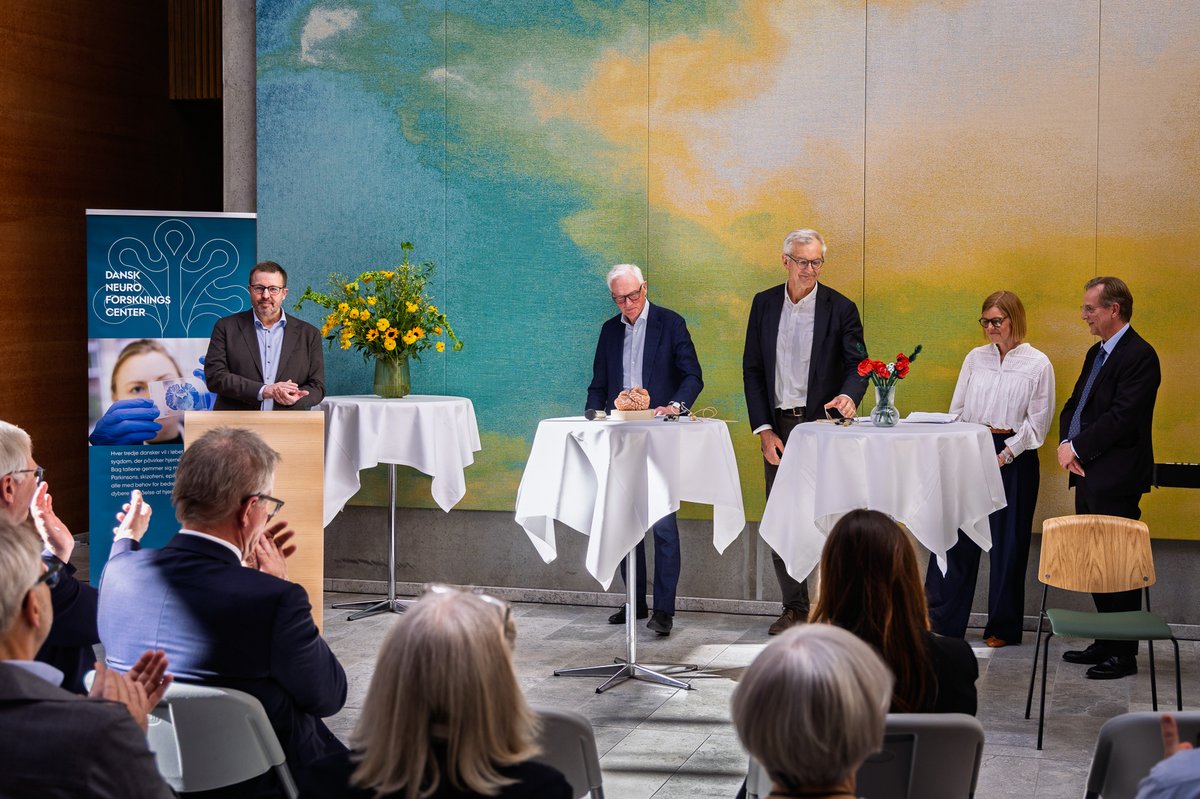
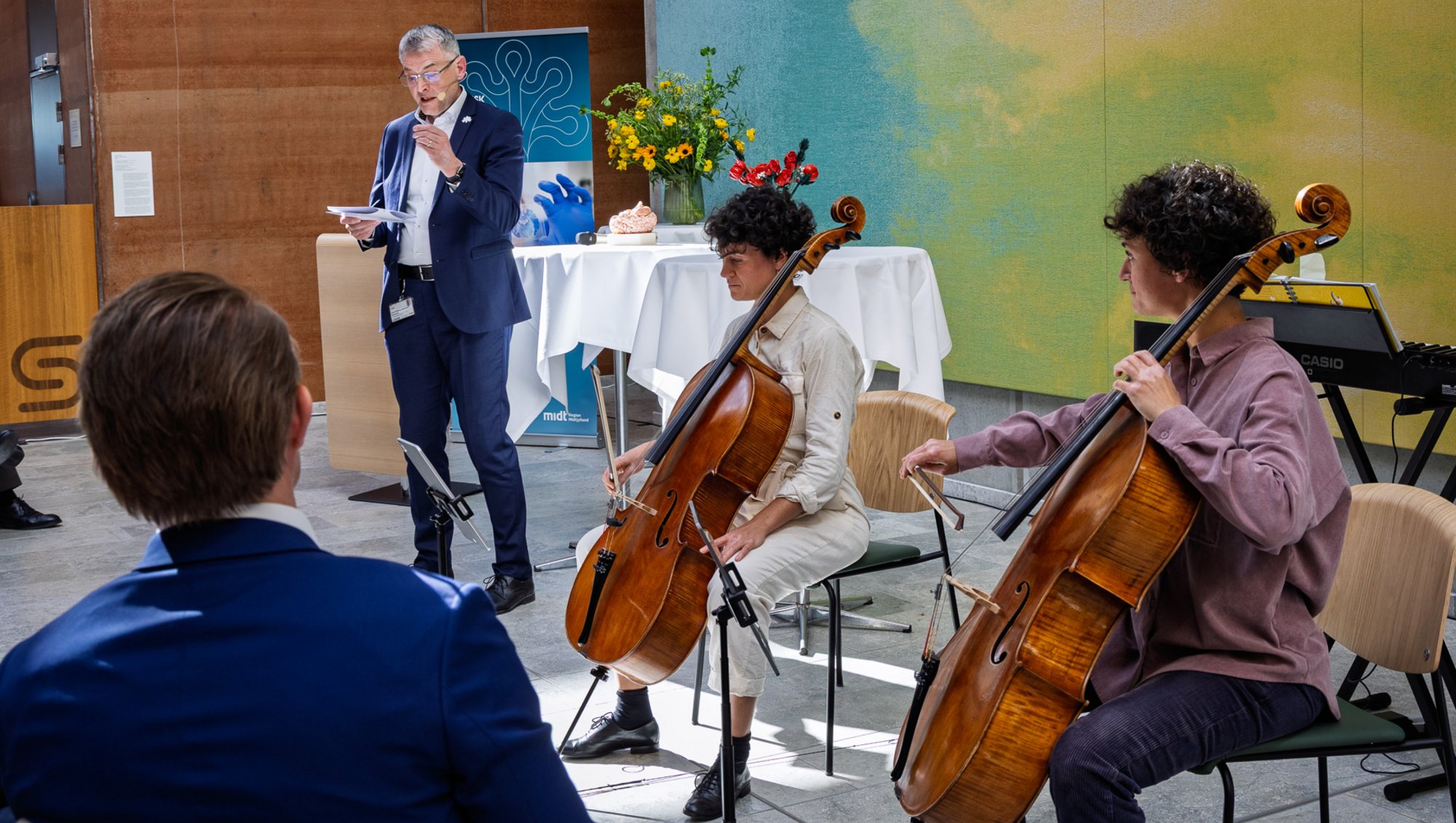
The April sun streamed through the windows of Forum on Tuesday afternoon as Aarhus University Hospital, the Central Denmark Region and Aarhus University gathered the donors behind the future Danish Neuroscience Centre to say thank you.
Chair of the Regional Council Anders G. Christensen opened the afternoon with a remark that when the sun shines, our minds grow brighter too – good for the brain, good for everything. But behind the light opening lay a weightier reality. Brain disorders affect one in three Danes during their lifetime, and the Danish Neuroscience Centre is about more than bricks and mortar – it is about what those bricks can become a springboard for:
"With the Danish Neuroscience Centre, Aarhus University Hospital, Aarhus University and the Central Denmark Region cement our position as leaders in brain research and innovation – both nationally and internationally. Today is not just a milestone. It is a springboard," said Anders G. Christensen.
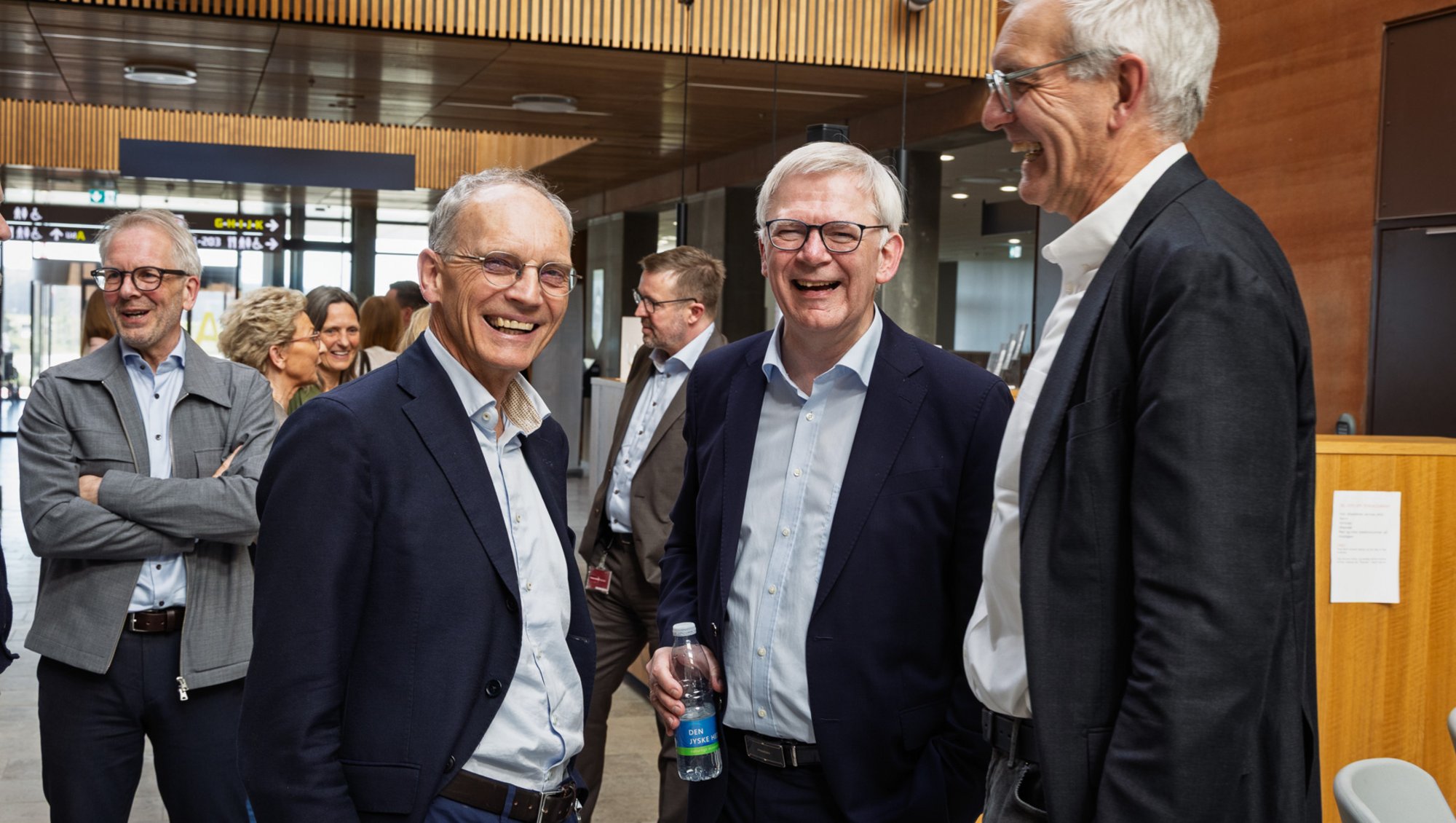
The event in Forum was made possible by the fact that funding is finally in place. The project is backed by grants from the Salling Foundations, the Lundbeck Foundation, KIRKBI A/S, the Aarhus University Research Foundation and the Central Denmark Region – and by a circle of ambassadors and private philanthropists.
The brain as a bridge builder
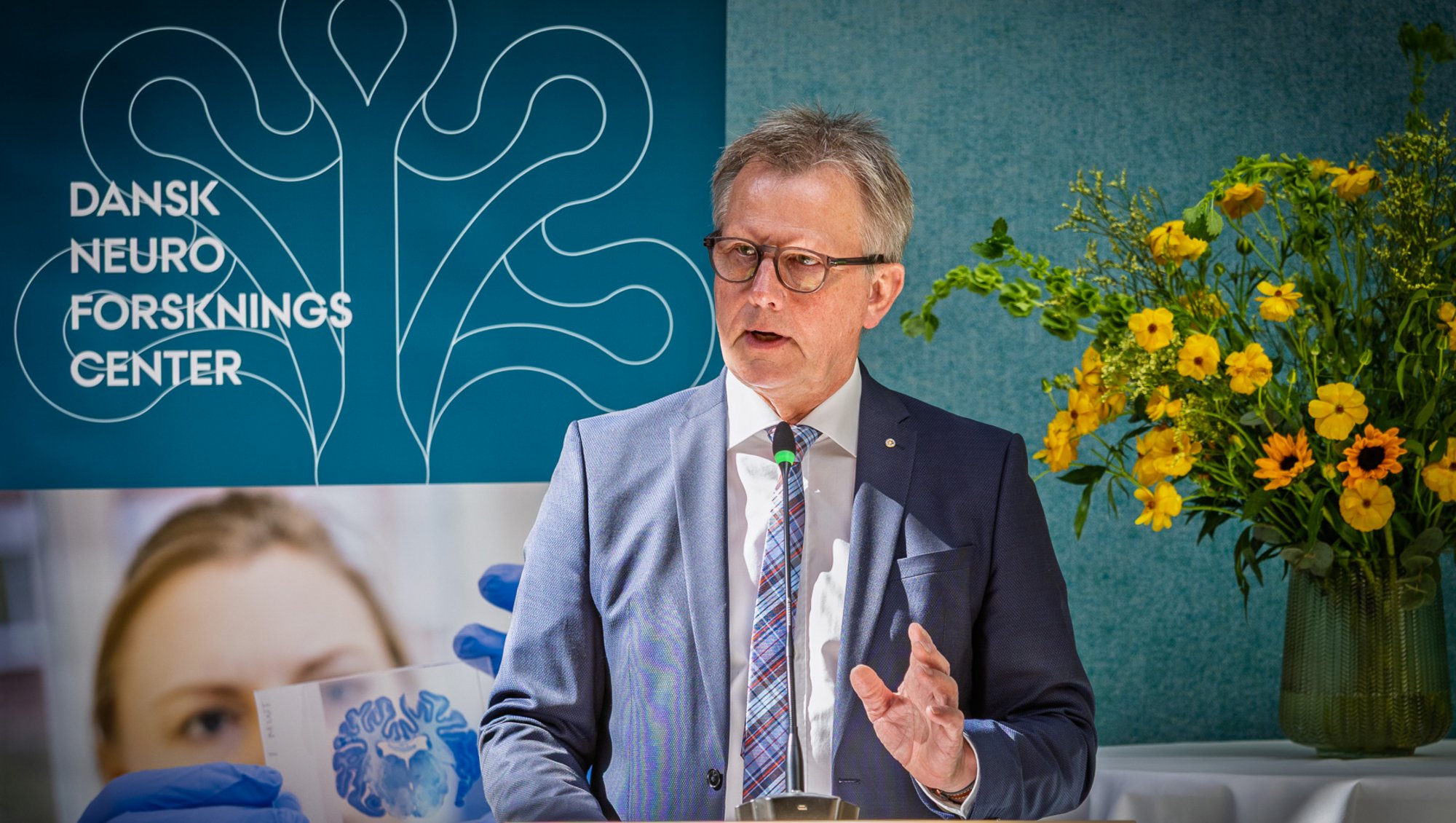
For Rector Brian Bech Nielsen, there is something almost paradoxical about brain research: The brain is the only organ in the world that has given itself a name, and the only one with the potential to understand itself.
Yet precisely its ability to connect thought and movement, senses and emotions, means that research into it cannot work in silos either:
“The combination of state-of-the-art facilities and a remarkably dynamic research environment helps make the Danish Neuroscience Centre a beacon in its field. This is true both when it comes to recruiting top researchers from around the world and when it comes to attracting collaborators and capital to the Central Denmark innovation ecosystem – so that the knowledge created here makes it all the way across the finish line and generates growth and welfare across society,” said Brian Bech Nielsen.

In the new building, more than 400 researchers from the university and the hospital will share a roof – and hopefully also share ideas. The location between the somatic and psychiatric departments is no coincidence. It is an architectural reminder that body and mind belong together, and that research must reflect the same.
Four donors at the table
Hospital Director Thomas Balle Kristensen had taken his seat at the head of the table with four guests, each of whom has helped make the centre possible: Irene Dahl-Hansen from KIRKBI, Jan Egebjerg from the Lundbeck Foundation, Jens Bjerg Sørensen from the Salling Foundations and Jørgen Lang from the Aarhus University Research Foundation.
The conversation moved from the personal to the strategic – from the stories that made them say yes to the reflections on why brain research is a cause that demands both patience and nerves of steel.